Quick Reference for Planning
Before diving into the details, here's the essential information you need to mark your calendar and start planning your observation of this historic event.
Essential Details
- Date: Friday, April 13, 2029
- Closest approach: 21:46 UTC
- Best viewing window: 20:00-22:00 UTC
- Best locations: Europe, Africa, Western Asia
- Equipment needed: None (naked eye visible)
- Moon phase: New Moon (dark skies)
Visibility Timeline
Apophis will be visible for approximately 24 hours as it makes its historic close approach, but the viewing experience will vary dramatically depending on your location and the time of observation.
April 13, Morning (UTC): First visible to naked eye in Southern Hemisphere; passes over Australia
April 13, Afternoon: Crosses Indian Ocean with increasing brightness; daytime for US East Coast
20:00-21:00 UTC — Peak Viewing: Peak brightness period; best naked-eye viewing from Europe, Africa, Western Asia
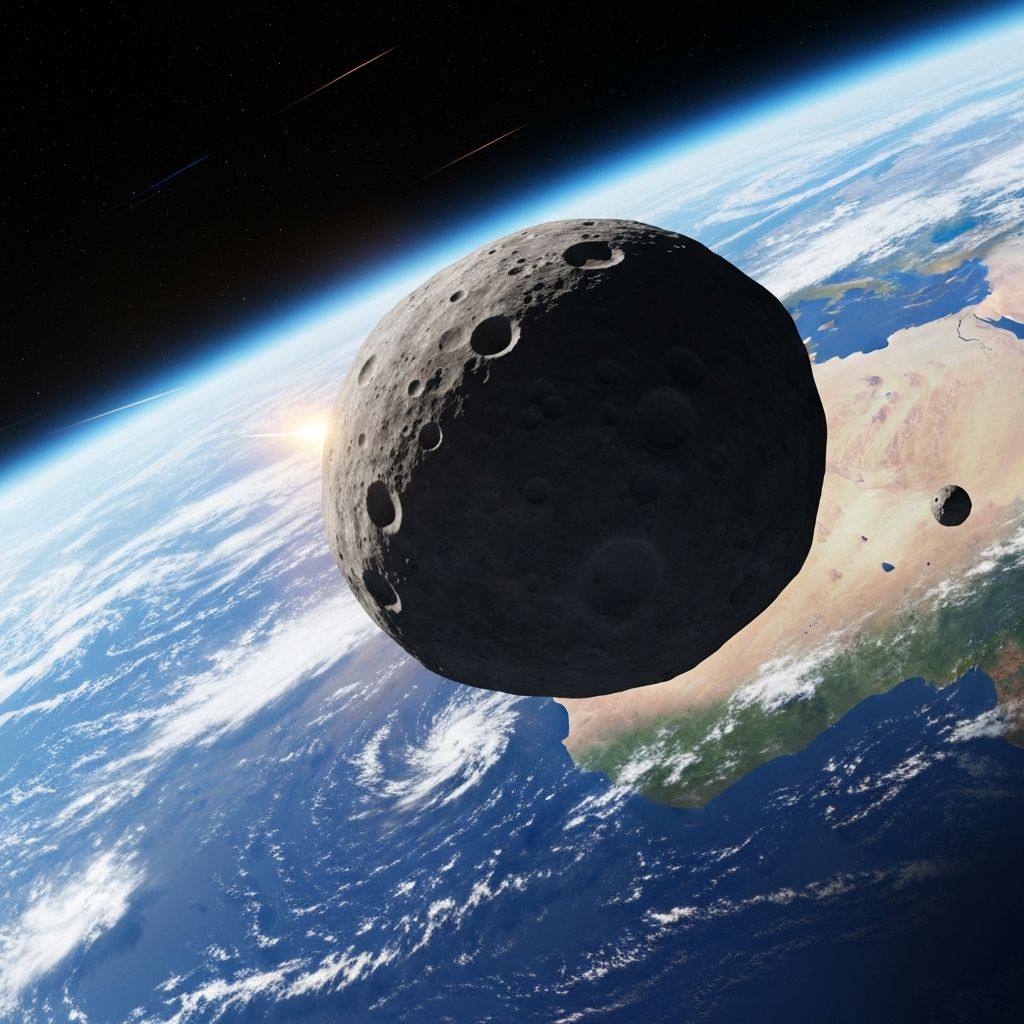
21:46 UTC — CLOSEST APPROACH: 31,600 km above Atlantic Ocean, west of Africa and Europe
22:00+ UTC: Crosses Atlantic in ~1 hour; becomes daytime object, fades from naked-eye visibility
April 14, 14:32 UTC: Closest approach to Moon (~95,000 km from lunar surface)
Sky Path Through the Constellations
Over approximately 24 hours, Apophis will trace a 205° arc across the sky, moving through several familiar constellations:
- Starting point: Centaurus (southern sky)
- Direction: Moving northwest
- Midpoint: Through Cancer around closest approach
- Peak passage: Into Perseus
- Final stretch: Southwest into Pisces
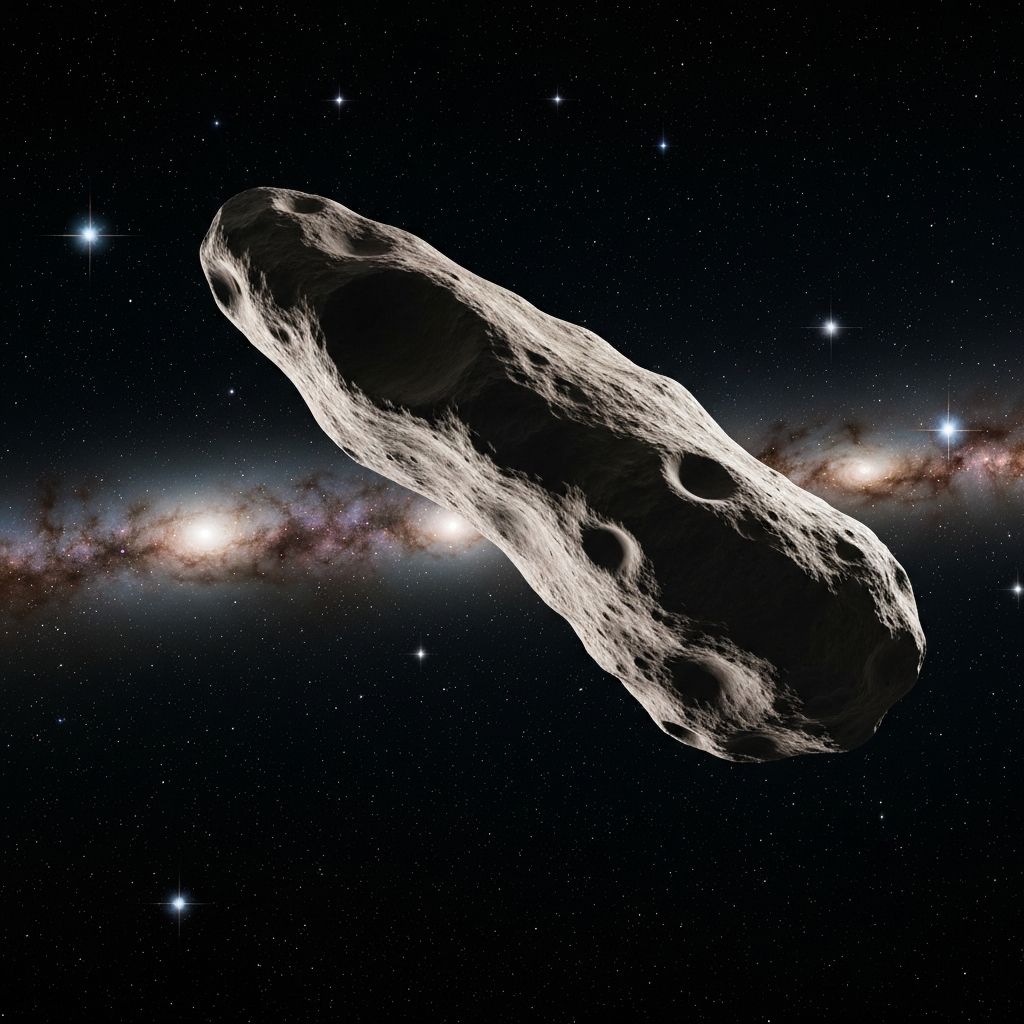
"At magnitude 3.1, Apophis will be as bright as the stars in the Big Dipper. But unlike those distant suns, this 340-meter asteroid will be just 31,600 kilometers away — moving noticeably across the sky in real time."
Best Viewing Locations
Prime Viewing (Naked Eye at Peak)
The following regions will experience optimal viewing conditions during peak brightness:
- Europe: France, Germany, Spain, Italy, UK, Scandinavia — evening/night viewing with excellent visibility
- Africa: Morocco, Algeria, Egypt, Nigeria, South Africa — evening viewing with dark skies
- Western Asia: Turkey, Saudi Arabia, Israel, Iran — evening viewing conditions
Good Viewing (Binoculars Recommended)
- Australia & East Asia: Early in approach phase; magnitude 4-5; morning viewing
- South Asia: Visible during approach phase with optical aid
Limited Viewing (Challenging Conditions)
- Americas: Closest approach occurs during daytime; may catch glimpse before sunset with binoculars or telescope
Equipment Recommendations
Naked Eye (No Equipment)
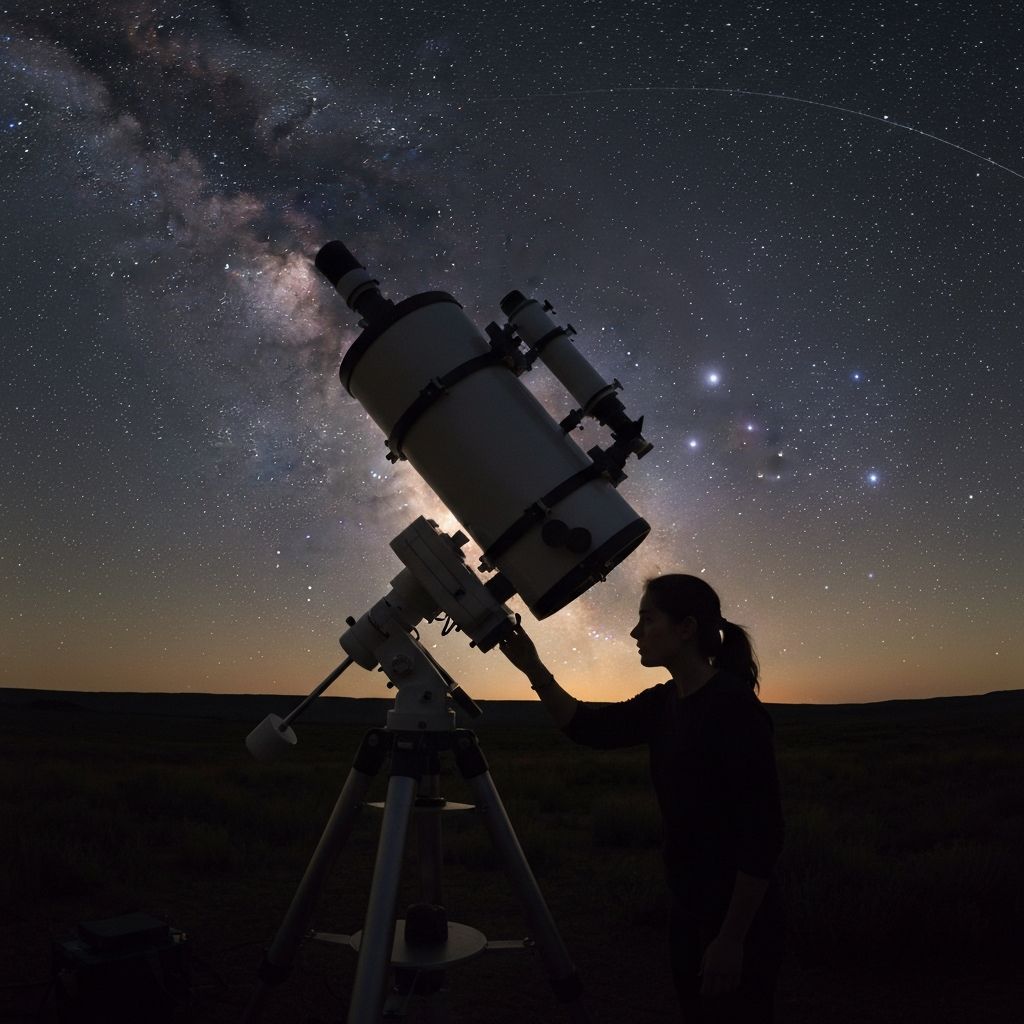
- Find dark location away from city lights
- Allow 20-30 minutes for eye adaptation
- Use star chart or astronomy app
- Look for moving "star"
Binoculars
- Any binoculars (7×50, 10×50) enhance view
- Useful for marginal viewing locations
- Recommended for Americas
- No special equipment needed
Small Telescope
- Not required but allows tracking at lower brightness
- Fast motion (42°/hour) makes tracking difficult
- Motorized/GoTo mounts helpful
- Challenge: keeping up with speed
Photography
- DSLR/mirrorless with manual exposure
- Wide-angle lens (24-35mm) for initial capture
- Short exposures (few seconds) to avoid trailing
- Time-lapse series shows motion against stars
Brightness and Appearance
At peak magnitude 3.1, Apophis will be comparable to the stars in the Big Dipper and approximately three times dimmer than Polaris (the North Star). It will appear as a star-like point of light — not a streak or a tail — moving against the background stars.
The angular speed will reach up to 42° per hour at closest approach — roughly one Moon-width per minute at its fastest. This is much slower than the International Space Station (which crosses the sky in minutes) but fast enough to notice motion in real time over several minutes of observation.
Fortunately, April 13, 2029, coincides with a New Moon, meaning dark skies with no lunar interference — perfect conditions for observing this faint but historic visitor.
Smartphone Photography
Smartphones may work with night mode in prime viewing regions (Europe, Africa, Western Asia), but results will be limited. For best results, use a tripod or stable surface, enable night mode, and take multiple exposures. A DSLR or mirrorless camera will provide significantly better results.
Useful Resources and Apps
Several tools and resources can help you plan and execute your observation:
- TheSkyLive: Real-time position, ephemeris, and finder charts (theskylive.com/apophis-info)
- Sky Tonight App: Mobile app to locate Apophis in real-time using your phone's GPS and compass
- NASA JPL Horizons: Precise ephemeris data for any location on Earth
- Stellarium (Free): Desktop planetarium software for planning observations
What Scientists Will Observe
While you're observing with the naked eye or binoculars, professional astronomers worldwide will be conducting intensive observation campaigns:
- Radar imaging: Goldstone and Green Bank (US); Canberra DSS-43 (Australia) — achieving meter-scale resolution
- Optical telescopes: Photometry, astrometry, and spectroscopy from observatories worldwide
- Space telescopes: Various space-based platforms contributing unique perspectives
- Spacecraft missions: ESA's Ramses and NASA's OSIRIS-APEX providing close-up observations
- Citizen science: International Asteroid Warning Network (IAWN) coordinating amateur astronomer participation
A Historic Moment
NASA and ESA estimate approximately 2 billion people will have the opportunity to observe Apophis with the naked eye during the 2029 flyby — four times more than watched the Apollo 11 Moon landing. This will be the first time in recorded history that a potentially hazardous asteroid is visible to the naked eye during a close approach.
Whether you're in a prime viewing location with perfect dark skies, or catching a glimpse with binoculars from a less favorable region, you'll be witnessing a once-in-7,500-years event — the closest approach of an asteroid this size that humans have ever known about in advance, and the first ever when we have the technology to observe and study it in unprecedented detail.