A Close Call Before the Big One
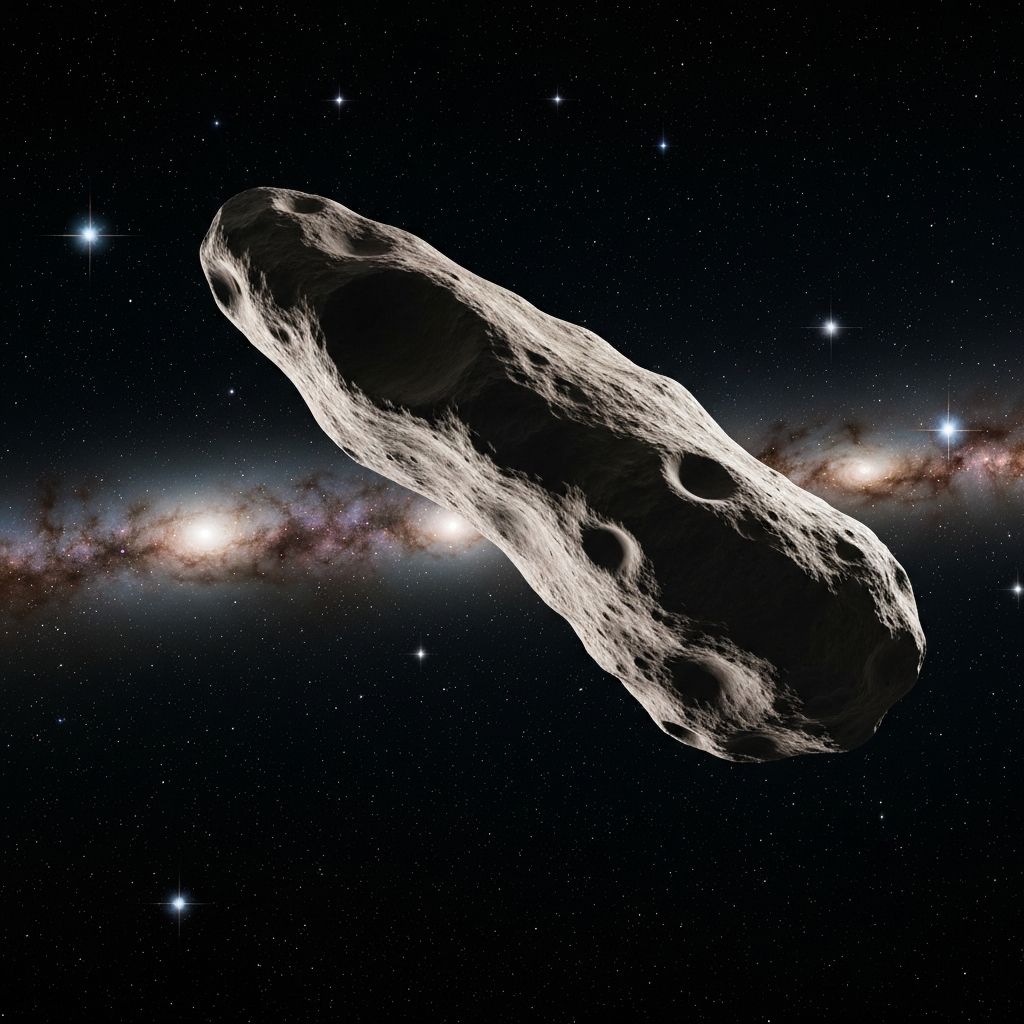
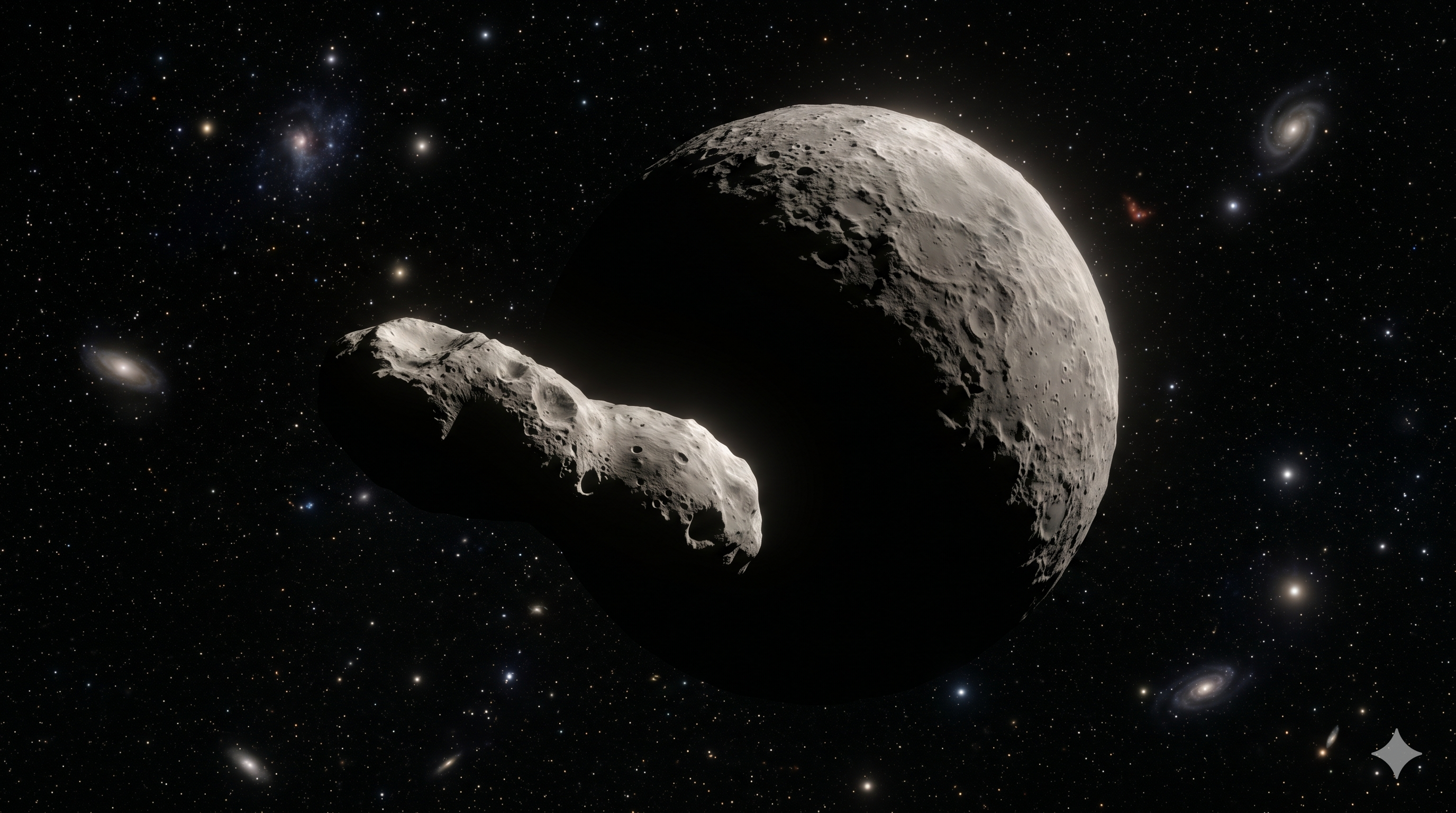
Eight months before its historic close approach to Earth, asteroid 99942 Apophis will experience its own close encounter — this time with another asteroid. On December 25, 2026, Apophis will pass near asteroid 4544 Xanthus with a Minimum Orbit Intersection Distance (MOID) of less than 10,000 kilometers.
While this might sound alarming, detailed analysis by planetary scientists has confirmed there's no risk of collision. However, the encounter represents the closest and most significant asteroid-to-asteroid interaction Apophis will experience before its April 2029 Earth flyby, making it a subject of intense scientific interest.
This Christmas Day encounter highlights a fundamental aspect of planetary defense: monitoring not just an asteroid's path toward Earth, but also its potential interactions with other objects in the solar system that could alter its trajectory.
Understanding the Xanthus Encounter
The close approach between Apophis and Xanthus was identified by Paul Wiegert of the University of Western Ontario and Ben Hyatt of the University of Waterloo in research published in the Planetary Science Journal in 2024. Their study examined all known asteroid encounters with Apophis leading up to the 2029 Earth flyby.
What is MOID?
Minimum Orbit Intersection Distance (MOID) measures the closest theoretical distance between two orbital paths. A MOID under 10,000 km means the orbits come within 10,000 kilometers of intersecting — but it doesn't mean the objects themselves will get that close, because timing matters.
On December 25, 2026, Apophis and Xanthus will pass through their MOID region separated by approximately four hours. This time difference is crucial: while their orbital paths bring them within 10,000 kilometers of each other in space, the asteroids themselves will be separated by roughly 528,000 kilometers — more than the distance from Earth to the Moon — when they make their closest approach.
The relative velocity between the two asteroids is approximately 11 kilometers per second. At this speed, the four-hour time separation translates to a spatial separation of about 158,400 kilometers — providing a comfortable margin of safety.
Meet Asteroid 4544 Xanthus
Asteroid 4544 Xanthus is considerably larger than Apophis. With a diameter of approximately 1,300 meters — nearly four times larger than Apophis's 340-meter diameter — Xanthus is roughly 25 times more massive, assuming similar density.
Discovered on March 31, 1989, by astronomers Henry Holt and Norman Thomas at Palomar Observatory in California, Xanthus is classified as an Apollo-class near-Earth asteroid. Its orbital characteristics place it firmly in the category of objects that cross Earth's orbit, though it poses no impact threat to our planet.
Xanthus vs. Apophis
| Feature | Apophis | Xanthus |
|---|---|---|
| Diameter | ~340 meters | ~1,300 meters |
| Relative Mass | 1× | ~25× (assuming similar density) |
| Orbital Class | Aten (currently) | Apollo |
| Discovery Date | June 19, 2004 | March 31, 1989 |
| Orbit Code | Well-determined | 0 (very well-determined) |
| Orbital Period | 323.6 days | ~388 days (1 year, 23 days) |
Xanthus's orbit has an "orbit code" of 0, indicating its trajectory is very well-determined — a critical factor in calculating the encounter with confidence. Without precise orbital data for both asteroids, predicting close approaches like this would be impossible.
Why Direct Collision is Ruled Out
The mathematics of orbital mechanics provide clear evidence that Apophis and Xanthus will not collide. Wiegert and Hyatt's study used detailed computer simulations of the solar system to calculate the paths of all known asteroids, including gravitational perturbations from planets and other factors.
Three key factors eliminate collision risk:
Time Separation: The asteroids pass through their closest orbital intersection point four hours apart. Even though their orbital paths come very close in geometric terms, the objects themselves are nowhere near each other at the same time.
Spatial Separation at Closest Approach: When the asteroids are at their nearest point to each other, they'll still be separated by approximately 528,000 kilometers — more than the Earth-Moon distance of 384,000 kilometers.
Well-Determined Orbits: Both asteroids have been tracked extensively. Apophis has been observed continuously since 2004, and Xanthus's orbit has been refined over 35 years since its discovery. The precision of these orbital calculations leaves no room for unexpected collision scenarios.
"We calculated the paths of all known asteroids using a detailed computer simulation of the solar system, and fortunately, no collisions are anticipated."
— Paul Wiegert, Department of Physics and Astronomy, University of Western Ontario
The Accompanying Material Question
While a direct collision between Apophis and Xanthus is ruled out, the encounter raised an intriguing question: could material accompanying Xanthus strike Apophis instead?
Asteroids don't travel alone in pristine isolation. They can be surrounded by:
- Dust trails: Fine particles shed from the asteroid over time
- Debris fields: Material from past collisions or surface degradation
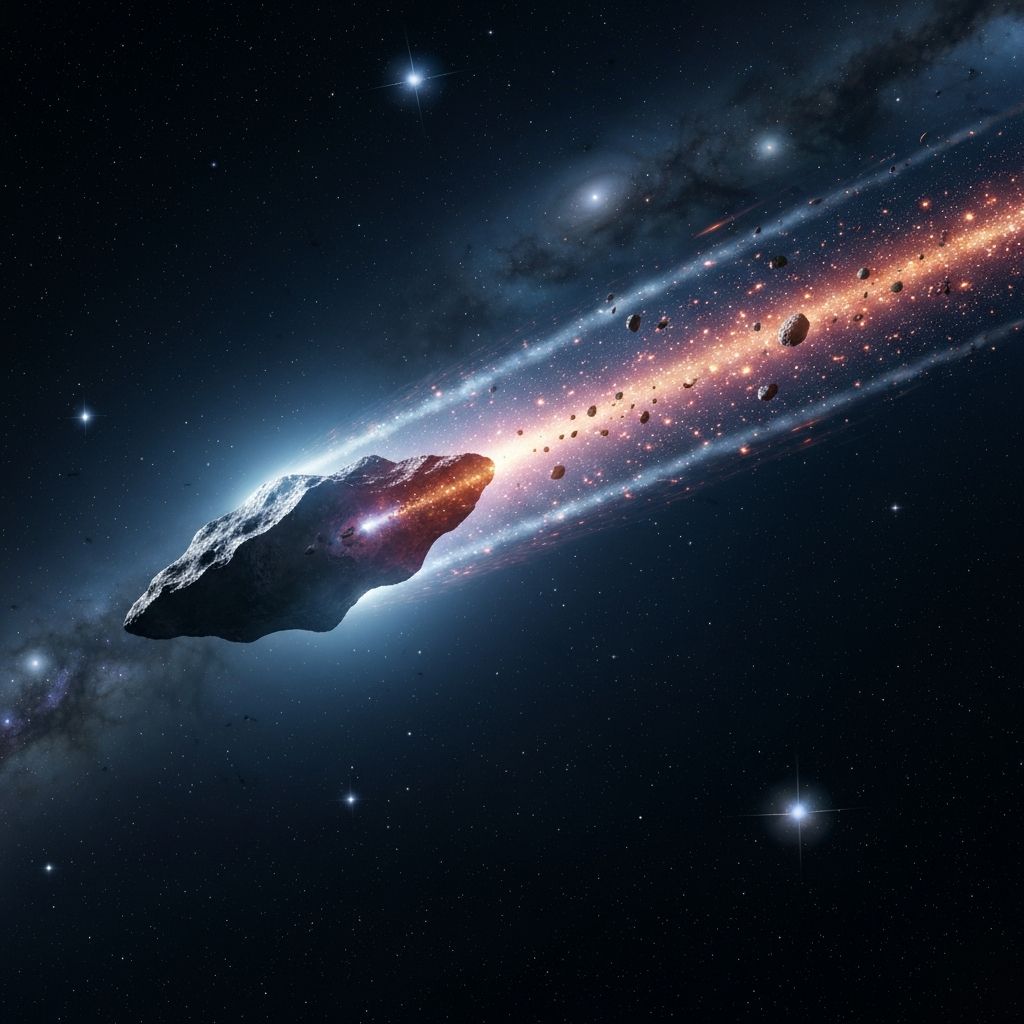
- Co-orbital objects: Smaller fragments sharing similar orbits
Given the encounter distance of 528,000 kilometers and the relative velocity of 11 km/s, Wiegert's analysis considered whether material accompanying Xanthus could pose a risk to Apophis. The conclusion: such an impact is extremely unlikely but theoretically possible.
The Energy Question
If a piece of debris did strike Apophis, would it matter? The answer depends on the size of the impactor. Dust particles in the sub-millimeter range would have negligible effect. However, Wiegert's calculations show that even a single 10-centimeter particle striking Apophis at 11 km/s would release approximately 20 megajoules of kinetic energy — equivalent to about 5 kilograms of TNT.
While this sounds dramatic, it's important to maintain perspective. A 10 cm impact would create a small crater on Apophis's surface but would have minimal effect on the asteroid's overall trajectory. Any change would be far smaller than the ongoing Yarkovsky effect — the thermal radiation force that causes Apophis to drift 170-199 meters per year toward the Sun.
Still, the researchers note that such an impact could, in principle, have a "non-negligible effect" on Apophis's impact probability with Earth at a later date. This cautious language reflects the high stakes involved: when dealing with planetary defense, even extremely low-probability scenarios warrant careful consideration.
The Only Significant Pre-2029 Asteroid Encounter
What makes the Xanthus encounter particularly noteworthy is its uniqueness. Wiegert and Hyatt's comprehensive survey of all known asteroids found that this December 2026 encounter is the closest and most significant interaction Apophis will experience with another cataloged asteroid before its April 2029 Earth flyby.
This means that, barring an encounter with an unknown or very small asteroid, Apophis will arrive at its Earth encounter in April 2029 with its trajectory unchanged by asteroid-asteroid interactions. This finding provides crucial confidence for trajectory predictions leading up to the historic 2029 event.
The research also addressed a persistent question that had lingered since Apophis was first identified as a near-Earth object: could another asteroid strike Apophis and deflect it toward Earth? The answer, based on analysis of all known asteroids, is definitively no.
Implications for the 2029 Flyby
The Xanthus encounter, despite occurring eight months before the Earth flyby, has minimal implications for Apophis's trajectory toward Earth. Even if material from Xanthus did somehow strike Apophis — an extremely unlikely scenario — the resulting perturbation would be insignificant compared to the gravitational effects Apophis will experience during its close approach to Earth.
Earth's gravity will permanently alter Apophis's orbit, changing its orbital period from 323.6 days to approximately 428 days and transforming it from an Aten-class to an Apollo-class asteroid. The encounter may trigger "asteroid-quakes," landslides, and surface changes. In comparison, any potential effects from the Xanthus encounter would be undetectable.
Monitoring Beyond Known Objects
While the Xanthus encounter is the only significant interaction with a known asteroid, Wiegert conducted separate research examining the probability of Apophis striking unknown smaller asteroids. That 2024 study found the odds of Apophis encountering an asteroid larger than 3.6 meters — large enough to potentially divert Apophis toward Earth — are about two in a billion. The risk remains extremely low but highlights why continuous monitoring is essential.
Planetary Defense in Action
The identification and analysis of the Apophis-Xanthus encounter exemplifies modern planetary defense capabilities. This wasn't a case of discovering a threat — it was proactive risk assessment, using comprehensive data to rule out potential concerns before they could become sources of alarm.
The methodology demonstrates how far planetary defense has come:
- Comprehensive Cataloging: Tracking hundreds of thousands of asteroids with sufficient precision to predict encounters years in advance
- Computational Modeling: Running detailed solar system simulations to calculate gravitational interactions and encounter geometries
- Risk Assessment: Evaluating not just the most likely scenarios, but also low-probability edge cases like accompanying material
- Transparent Communication: Publishing findings in peer-reviewed journals and making data publicly accessible
This systematic approach transforms asteroid monitoring from reactive observation into predictive science. Rather than waiting to discover problems, researchers actively search for potential issues and resolve them through analysis.
Looking Ahead to December 2026
Will the Xanthus encounter be observable? For professional astronomers with access to large telescopes, both Apophis and Xanthus will be trackable during December 2026. However, the encounter itself won't be a visual spectacle — the 528,000-kilometer separation means the asteroids will appear as separate point sources, not a dramatic near-miss.
The scientific value lies not in observation of the encounter itself, but in what it confirms: Apophis will arrive at its April 2029 Earth encounter with its trajectory undisturbed by interactions with other known asteroids. This provides crucial confidence for the detailed observation plans being developed for the 2029 flyby.
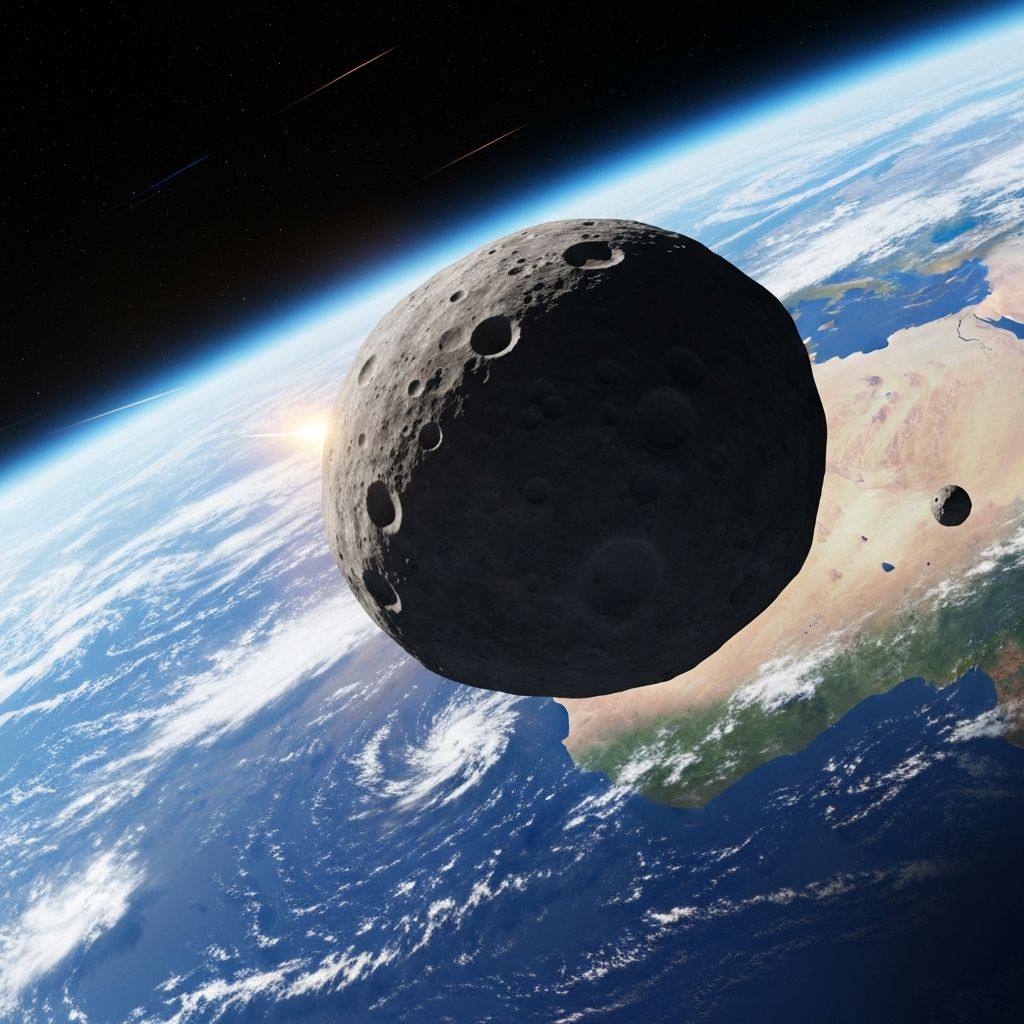
Ground-based telescopes may conduct observations of both asteroids during December 2026 as part of ongoing monitoring campaigns, but the primary focus of the astronomical community remains firmly on preparing for April 13, 2029, when Apophis will pass just 31,600 kilometers above Earth's surface.
The Broader Context: Unknown Objects
While Wiegert's research definitively rules out collisions with known asteroids, it also highlights an inherent limitation in planetary defense: we can only track objects we've discovered. The vast majority of small asteroids — those less than 100 meters in diameter — remain undetected.
This is why ongoing sky surveys like NASA's Near-Earth Object Observations Program and projects like the Vera C. Rubin Observatory's Legacy Survey of Space and Time (LSST) continue to search for previously unknown objects. Each discovery adds to our knowledge and allows for more comprehensive risk assessment.
For Apophis specifically, the probability of encountering an unknown asteroid large enough to significantly alter its trajectory remains extremely low — measured in parts per billion — but the stakes are high enough that continued vigilance is warranted.
A Christmas Day Non-Event
The December 25, 2026, encounter between Apophis and Xanthus represents a peculiar kind of news: a non-event that's worth knowing about precisely because it's a non-event. In an era where asteroid headlines can generate unwarranted alarm, this encounter demonstrates the maturity of planetary defense science.
Researchers identified a close approach, analyzed it comprehensively, ruled out collision risk, and published their findings for peer review. The result is not a new threat to monitor, but rather confirmation that Apophis's path to its historic 2029 Earth encounter remains clear of known obstacles.
As we count down to April 13, 2029 — now less than three years away — the Xanthus encounter serves as a reminder that planetary defense is about more than tracking asteroids toward Earth. It's about understanding the complex dance of objects throughout the solar system and ensuring that when humanity witnesses its first recorded close approach by an asteroid of Apophis's size, we do so with confidence, preparation, and scientific understanding.
The countdown continues. Apophis is coming. And thanks to research like Wiegert's, we know exactly what to expect along the way.